

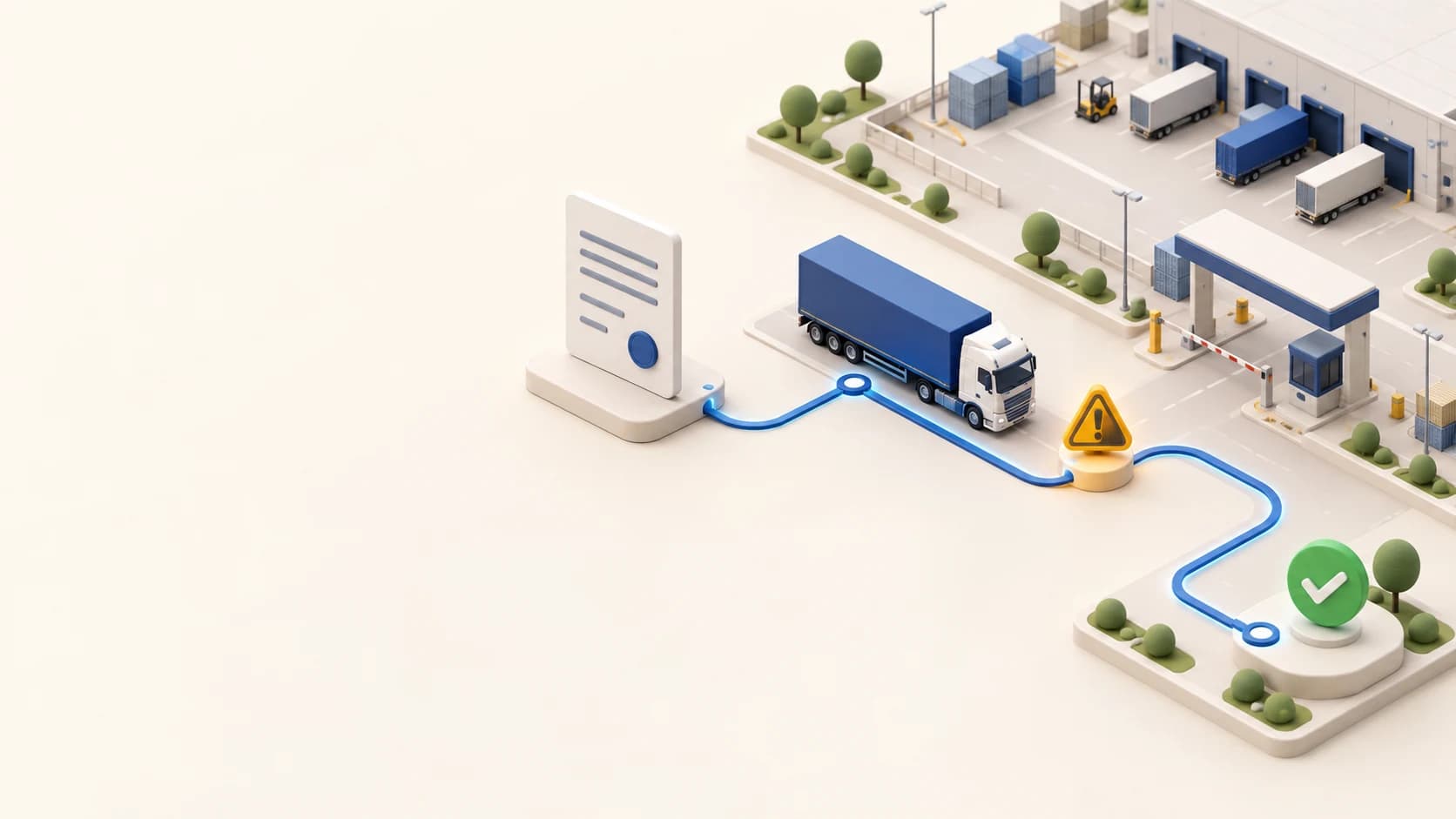
The ticket is handed to the driver, but the party held responsible is the company. These two get confused constantly: the driver brings the report back, the office says "the truck is the subcontractor's, let them pay", and the matter is considered closed. It is not closed. If the operating licence is yours, so is responsibility for that trip being in scope.
The question carriers ask most about a K belgesi fine is not how much it is, but who pays it. The answer differs from what most people expect: the fine goes neither to the driver at the wheel nor to the owner of the truck, but to the operating licence holder who took on the carriage.
This looks like a small legal detail, and it gets expensive as the fleet grows. On a trip run with a subcontractor's truck the report is handed to the driver, the office closes the matter with "it isn't our vehicle", and the gap simply stays in the records.
This article covers how the responsible party is determined, which gap causes which outcome, why no amount is published here, and where to check your own record.
Who is the K belgesi fine issued to?
An operating licence is issued to a company. The obligations attached to it therefore belong to that company. The question asked at an inspection is not "who is driving this vehicle" but "under which operating licence is this carriage being performed".
Serving the report on the driver does not change that picture. Service is made to whoever is in the vehicle at that moment, because that is who the roadside team is dealing with. Who carries the obligation is read from the licence.
There are fines that can be issued to the driver separately — licence class, professional competence certificate, driving and rest hours. These are independent headings and do not replace the fine issued to the company; the two run in parallel.
"The truck is the subcontractor's, let them pay" is a sentence heard often in the office. If your contract has a recourse clause you can pass the cost on — that is a matter between you and them.
For the authority, however, the responsible party does not change. The record is opened against your licence, and repetition accumulates on your file.
Which gap causes which outcome?
Not every gap leads to the same place. Who is responsible, and how heavy the outcome is, depends on the type of gap.
| Gap | Responsible party | Outcome |
|---|---|---|
| No operating licence at all | The company performing the carriage | Carriage outside scope; can extend to suspension of activity |
| Licence held, vehicle not registered to it | Licence holder | Vehicle counts as outside scope; the trip is treated as unlicensed carriage |
| Licence expired | Licence holder | Scope is interrupted until renewal is completed |
| Vehicle card not in the vehicle | Licence holder | Registration of the vehicle to the licence cannot be proven roadside |
| Licence type does not cover the carriage performed | Licence holder | Activity outside authorisation; holding a licence gives no cover |
| Driver licence / competence certificate missing | Driver, and the company depending on circumstances | A separate sanction; does not replace the company's fine |
The second row is the one growing fleets hit most often. The licence is valid, the company is registered, everything looks fine — but that plate has not yet been written onto the licence. We covered how a vehicle is added and where the process stalls in adding a vehicle to a K belgesi.
Why no amount is published here
Administrative fines are revised every year by the revaluation rate. The amount is not a single figure either: it varies by the type of gap, by whether it has been repeated, and by the scope of the carriage.
Most of the "the K belgesi fine is X" content circulating online belongs to an earlier year and has not been updated. Publishing such a figure here would mean giving you something with a high chance of being wrong by the time you read it.
For the current amount there is only one correct source: the official channel — the Ministry of Transport and Infrastructure and the regulation as currently in force. When you plan, account not for the figure but for how often the exposure repeats — repetition is what produces the real cost.
One more point that is easy to miss: the vehicle card is what ties a plate to your licence, and a card left in the office rather than the vehicle is its own finding — what a vehicle card is covers where it belongs and how it is renewed.
How do you check the record?
There are two separate records here, and they are frequently confused.
- Operating licence and transport activity records: seen through the e-Devlet portal and Ministry of Transport and Infrastructure systems.
- Traffic fines: seen through e-Devlet's traffic penalty enquiry service, using plate and identity details.
Because they are held in different places, checking one does not cover the other. The mistake fleet managers make most often is seeing a clean traffic penalty screen and never opening the licence side at all.
While you are checking, also verify which plate is registered to which licence. If a vehicle was sold, a lease ended, or you parted ways with a subcontractor, the plate may still sit on the licence — which is its own source of mismatch.
The licence renewal cycle and vehicle add/remove operations do not share a calendar. Your licence can be valid while the plates listed on it are out of date.
Check the two lists separately: the validity date of the licence, and the plates registered to it.
The real cause is usually not a lack of knowledge
In fleets past ten vehicles, the source of the gap is almost never unfamiliarity with the regulation. The source is that which licence a plate sits on is not held in one place.
The vehicle list is in a spreadsheet, licence photocopies are in a folder, subcontractor contracts are in email. A new truck arrives, a driver is assigned, it goes under load the next day; the licence record joins a queue. Every trip in that gap is outside scope.
The same scatter doubles on trips run with subcontractor vehicles: afterwards nobody can say clearly which trip was performed under which licence.
When plate, driver and trip sit on the same record, "which licence was this trip run under" stops being something to investigate after the fact. Vehicle and driver are captured the moment the trip is opened, and any missing field shows on the same screen.
Try it with your own tripsA short checklist
- When does your operating licence expire?
- Does the plate list on the licence match your fleet today, one for one?
- Have sold vehicles, ended leases and former subcontractors been removed from the list?
- Are the vehicle cards in the vehicles, or in a cabinet at the office?
- On subcontractor trips, does the record state which licence the carriage ran under?
If your answer to any of the five is "not sure", the exposure is not in the regulation but in your record keeping. Most of the fines described in this article are born in exactly that gap.
Which carriage requires which licence type is covered in which operating licence do you need. For sanctions on the U-ETDS side, see the U-ETDS penalty — the two bodies of regulation do not cover for one another; they run in parallel.
The filing side is a separate obligation; its scope and how it runs alongside the trip record are covered on the U-ETDS page.
See it with your own trips: which trip was run under which certificate, and what was left missing.
Try 14 days freeFrequently asked questions
Is the K belgesi fine issued to the driver or the company?
For licence-linked gaps the responsible party is the company. The report may be served roadside on the driver because they are the one operating the vehicle, but the obligation belongs to the operating licence holder. Fines that can be issued to the driver separately — licence class, professional competence certificate, driving and rest hours — are a distinct matter and do not replace one another.
The truck is a subcontractor's but I took on the carriage. Who is fined?
What matters is which operating licence the carriage was performed under, not who owns the vehicle. If you took on the carriage under your licence, scope responsibility is yours. Your contract with the subcontractor may govern who ultimately bears the cost, but it does not change who the authority holds responsible.
How much is the K belgesi fine?
The amount is not published here because administrative fines in Türkiye are revised every year by the revaluation rate and vary by the type of gap. Quoting a fixed figure would mean publishing something with a high chance of being wrong by the time you read it. Verify the current amount with the Ministry of Transport and Infrastructure and the authorities concerned.
Where do I check my record?
Operating licence and transport activity records are checked through the e-Devlet portal and Ministry of Transport and Infrastructure systems. Traffic fines sit on a separate channel, in e-Devlet's traffic penalty enquiry service. Because the two records are held in different places, checking one does not cover the other.
I forgot to add the vehicle to the licence and the trip is already done. What now?
A completed trip does not close the gap retroactively. If an inspection took place during that trip, the vehicle appears outside the licence scope. If it did not, the exposure can still surface in record-based reviews. The correct order is that the vehicle is registered to the licence first and goes under load afterwards.
Sources and references
- Ministry of Transport and Infrastructure (UAB)
- Road Transport Regulation — mevzuat.gov.tr
- Road Transport Law (4925) — mevzuat.gov.tr
- e-Devlet portal — licence and penalty enquiries
- U-ETDS — official portal of the Ministry of Transport and Infrastructure
This article is for general information; consult the relevant authority or your accountant for binding interpretation.